The Grand Canyon River Expedition (Prequel to 14 Days Rafting the Colorado River)
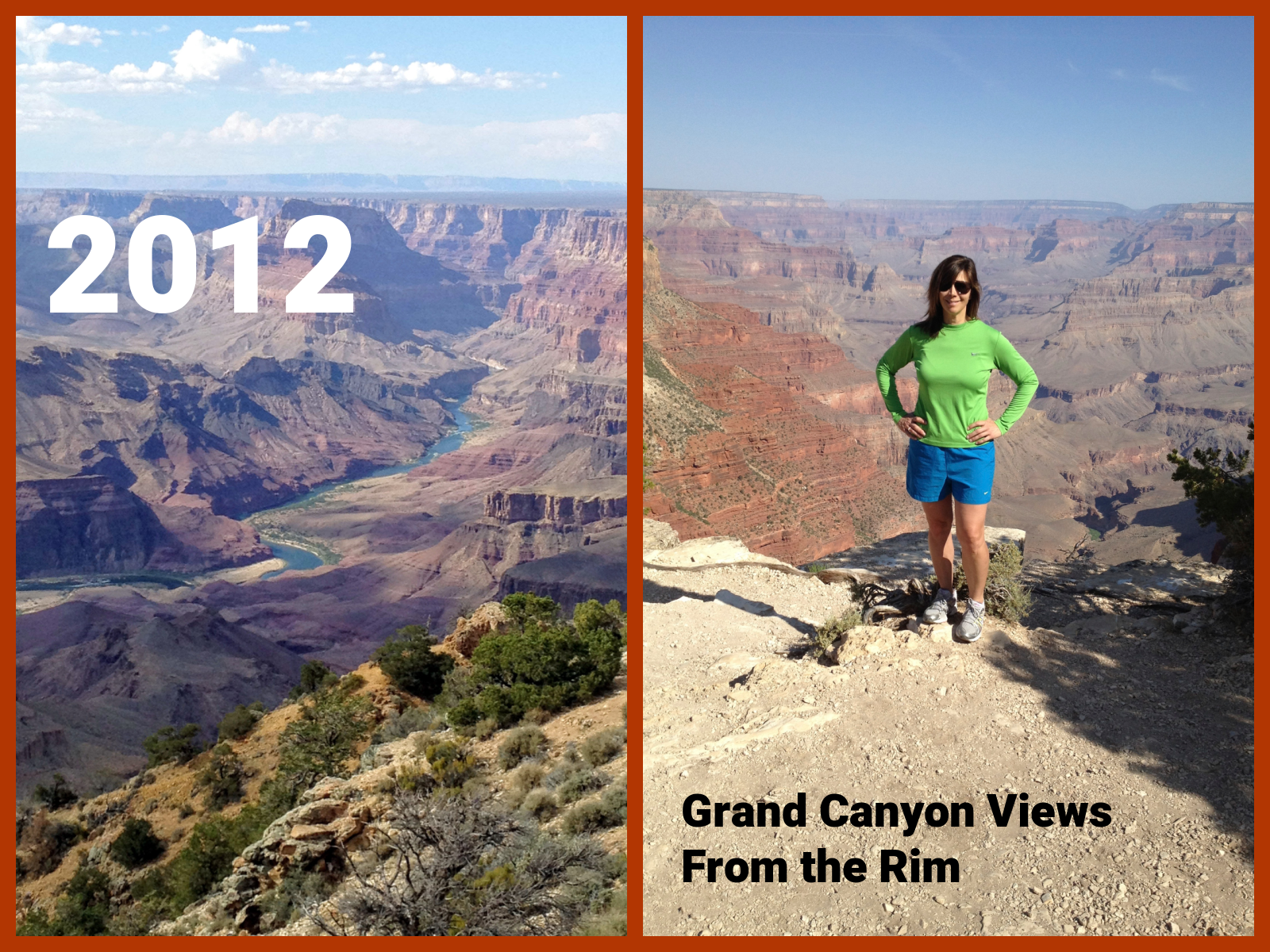
Photos from our 2012 Grand Canyon trip
This is the prequel story to my 14 day story series, following our white water rafting trip through 226 miles of the Colorado River.Previous Story: No Cotton Underwear
Next Story: Day 1
Looking Down at the River
“I want to raft that river someday.”
These were the words of my adventurous husband, Garrett, as we looked down at the Colorado River in 2012. Flowing rapidly, it appeared so small from our towering vantage point on the south rim of the Grand Canyon. Garrett was wooing me, his then-girlfriend, to the wonders of the world. He would frequently map out trips that went far outside the comfort zone of my Midwestern existence.
The Grand Canyon was a place I had visited many years earlier. It was a day trip with my young sons and former husband. We looked over the edge, took lots of photos, and enjoyed a lunch in a café with stunning views.
We were part of the 4 million+ visitors who take in the Grand Canyon from the rim each year. 10% of these visitors actually hike below the rim. And then only 0.5% brave souls raft the river that created this massive natural phenomenon.
Garrett had hiked rim-to-rim in his earlier years, falling into the 10% pool of Grand Canyon enthusiasts. As for the 0.5% pool of elite Grand Canyon rafters, I noted Garrett’s comment as a future bucket-list trip. Like the river’s distance from the upper rim, a rafting trip felt far from reality, and even more elusive was the idea that it would include me.
An Unexpected Email
Then, in April of 2025, an email invitation arrived in my inbox.
I immediately thought of Garrett and forwarded the email his way. The ties to Fort Lewis were mine. But the desire to join this adventure was his.
Join FLC’s 2026 Grand Canyon River Adventure Today
Dear Sandy,
Fort Lewis College is excited to announce its 9th annual Grand Canyon River adventure, launching June 3, 2026. This trip will be our first journey down the river in dories, accompanied by a favorite history professor, Dr. Andy Gulliford. He will share plenty of stories, a few lectures, and a deep knowledge of the region. This 14-day river trip is open to alumni, friends, and donors to FLC...
Garrett loved white-water rafting and had taken overnight trips down Idaho’s demanding Middle Fork of the Salmon River and Hells Canyon. My part in these trips was letting out a sigh of relief when I got the text that he was off the river and safe. Although I had joined low-key one-day rafting excursions, taking on the rapids and risks of a 14-day trip was not on my radar.
Should I Be the +1?
The opportunity for Garrett to join a chartered Grand Canyon trip was huge. A permit is necessary for the journey, and we had heard stories of people waiting 10+ years to be drawn for a private permit. Taking the trip with an experienced outfitter, sponsored by our local college, was the perfect storm.
Then came Garrett’s unexpected response.
“Should we do this?”
It took about a hot minute for Garrett to read the forwarded email and send this reply. I was expecting to get his attention, but didn’t expect his excitement to include me.
“We? You want me to go too?”
I surprised myself when I felt a growing urge to be an active part of Garrett’s bucket-list trip rather than his supporting spouse from afar.
What’s a Dory?
The trip launch date was 6/4/26, a year away from the receipt of the invite. Plenty of time to prep, but a short timeline to commit. Garrett wanted to be sure I knew what I was in for before we signed up. He sent me various links and videos on what the trip entailed.
The trip description talked about a ‘journey down the river in dories’. I had never heard of a dory, but the internet was a great teacher in schooling me.
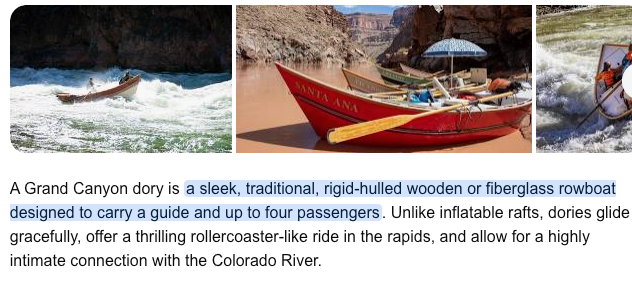
Not only were dories designed for the Colorado River, but they also had limited passenger participation. Unlike the paddle boats I had been on, following oaring instructions on rapids, my job on a dory would focus on body weight balance and bailing water. No rowing required.
Watching the videos, I found the boats' pronounced rocking motion a little daunting, but giving up rowing responsibilities when the stakes were high seemed like a fair trade-off.
After researching the outfitter, Arizona Raft Adventures (AzRA), I found them highly reputable. FLC had used them for the last nine annual Grand Canyon trips. They are a family-owned, third-generation outfitter with great reviews.
Lastly, I paid close attention to the athletic diversity among the Grand Canyon rafters while watching the videos. Not all the participants fit the profile of my adventurous husband. The demographic covered everyone from old to young, men and women. Some were very fit, and others were closer to my leisure athletic build.
Feeling more excitement than hesitation after performing my due diligence, I gave Garrett the nod, and ‘we’ signed up.
Trip Preparations
The year went fast. We met with Dave, FLC Foundation trip lead, who gave us excellent insight on how best to prepare. This would be Dave and the foundation’s 9th rafting trip with AzRA down the Grand Canyon.
AzRA checklists, condition updates, and ‘what to know’ about summer camping in the Arizona desert came in at a steady pace. I perused the emails and then filed them away for later reference. With a high degree of procrastination (read my packing story), I read through them all and followed my 7-page packing checklist, just in time to take off for an overnight in Flagstaff before our group launch.
Packing Space and Rations
Everything we brought needed to fit into two dry bags: the first, a white dry bag that we would lug with us on the boats during the day, and the other, available for camping at night. The slightly larger blue night bag would be transported during the day on one of the three oar boats assigned to our group of 20 rafter/campers.
Seeming impossible, would all the belongings I had organized and laid out in our spare bedroom actually fit in two bags? Yet somehow, all items necessary for 14 days in the desert and on the river fit perfectly in these two bags.
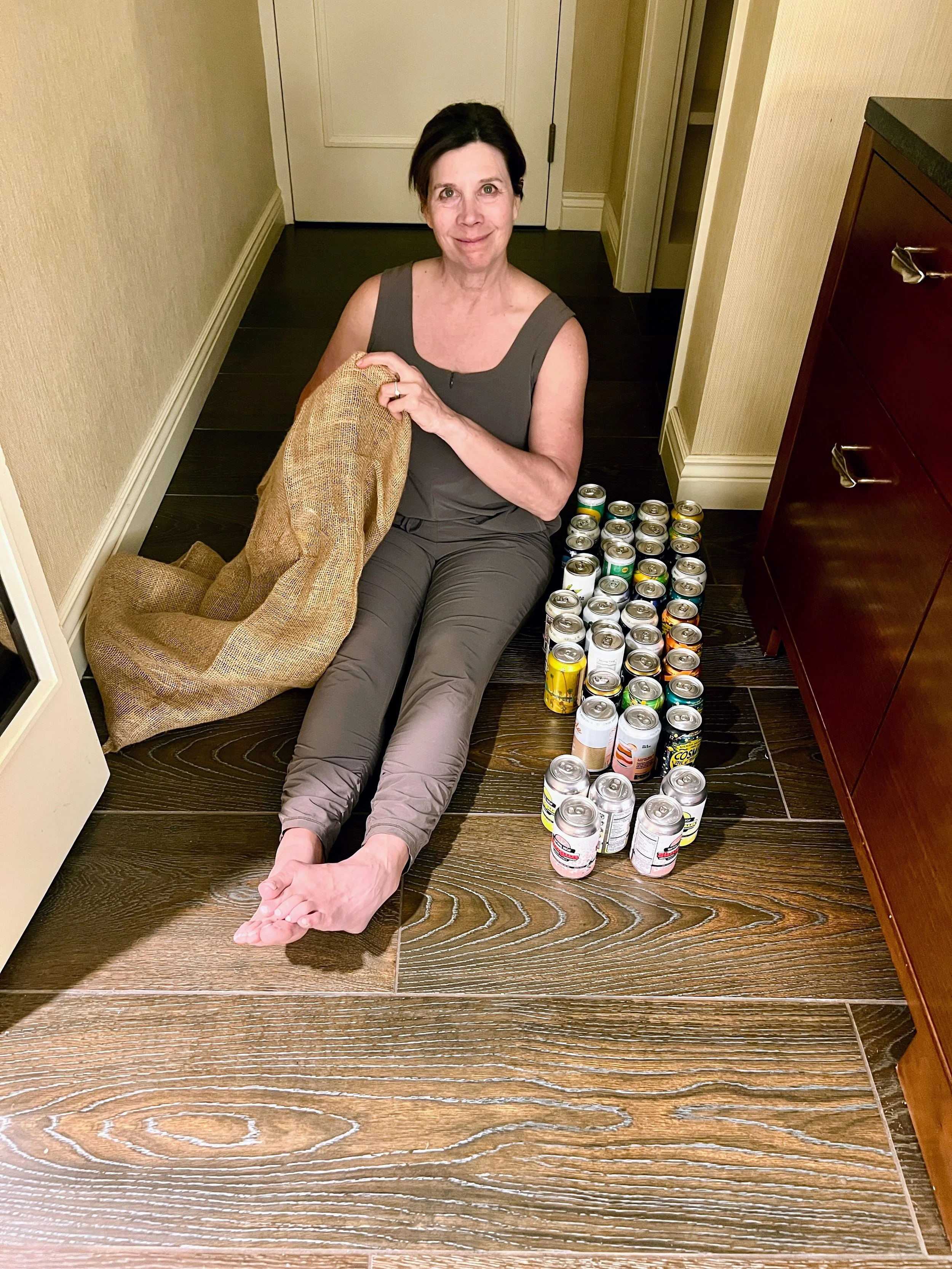
AzRA would also provide a second blue night bag that contained a tarp, sleeping bag, and sheet. Sleeping pads and tents would be available each night. All food and water/electrolytes would be provided. Other beverages of choice were on us (i.e., beer). Here, we were allowed to bring three 12-oz cans per day. Our ration would then be stored in labeled burlap bags.
Necessary items that took up space in our day/night bags included a backpack, hiking shoes, a raincoat, colder-weather gear (just in case), and soap/detergent, as clothes would need to be recycled throughout the trip. The river would be our sole bathtub and wash basin for two weeks (and place to pee).
D-Day
The morning of June 2nd, Garrett and I were ready to leave civilization and make the 5-hour drive to Flagstaff. Here we would attend an AzRA trip briefing and meet our fellow campers. We would also enjoy a final night of sleeping on a bed in air conditioning before a launch from Lee’s Ferry the next morning.
My computer, iPad, and earbuds were left behind. The only devices taken were my phone, which would serve as my camera, and my watch, which would track my movement. Our liquid refreshment rations were loaded with our trip gear. With a quick goodbye to our dog and his sitter, Garrett and I took off for Flagstaff.
There was no looking back.
Final Preparations
I expected our pre-trip overnight accommodation to be a low-rate camping lodge. Instead, the Little America Hotel, the official AzRA hotel in Flagstaff, was a cushy mountain retreat. Not only did they provide an excellent room before hitting the river, but they also would store our luggage and our parked car.
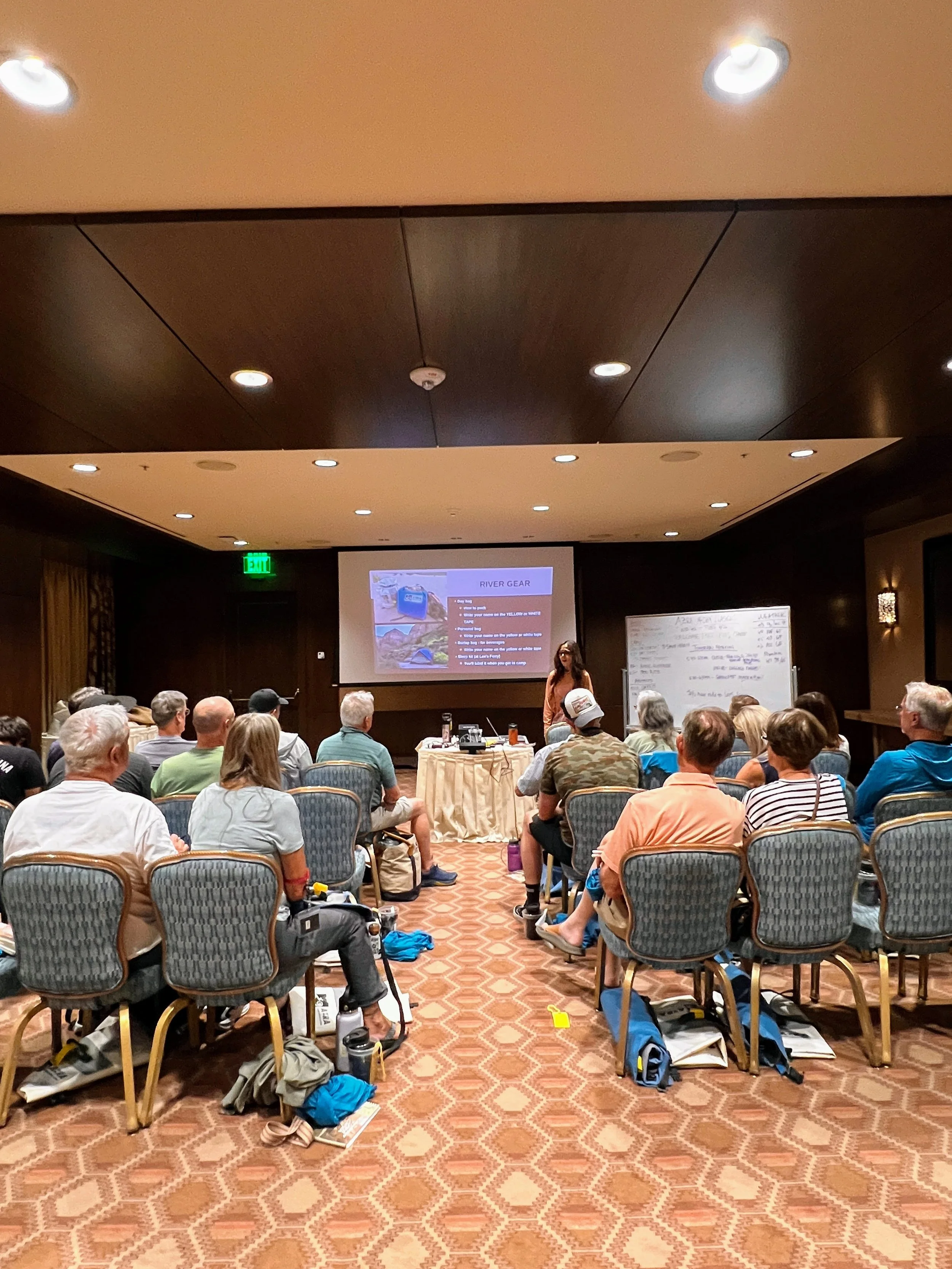
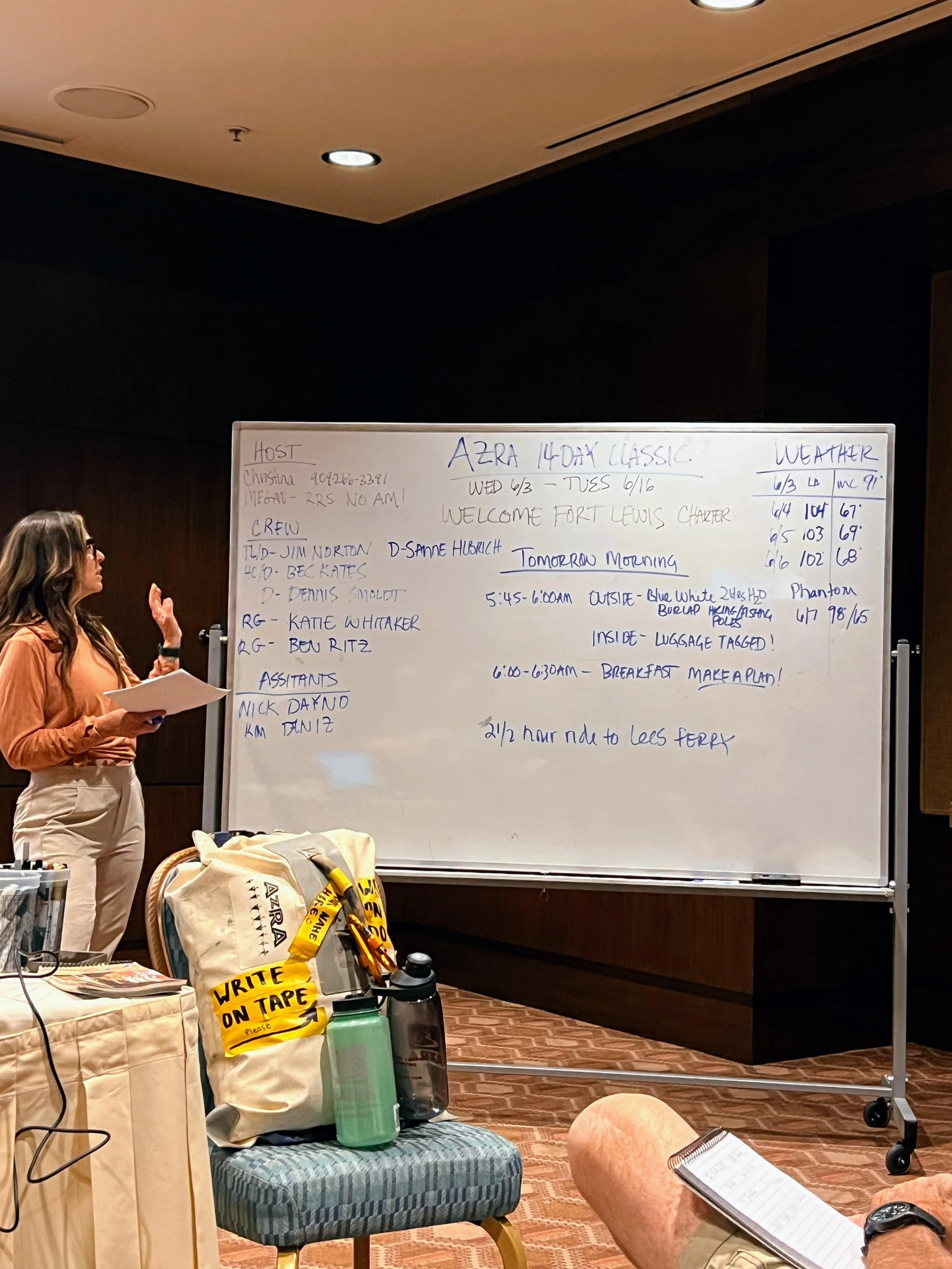
A prep meeting was held in a hotel conference room, where AzRA personnel walked through the specifics of the trip (temps, daily expectations, final packing details) and provided a store for last-minute items that may have been missed (think water bottles, SPF sun shirts, cap hooks, packable toiletries).
We did a round-robin of introductions among the diverse group of strangers who, in two weeks’ time, would know each other intimately. Ages varied as wildly as backgrounds. There were men from Indonesia, alumni from the Boundary Waters, married couples (one celebrating a 50-year anniversary), dads with sons… so many names and stories I needed to learn. I felt a mix of curious anticipation as we were told about the inherent risks of the trip we were about to take.
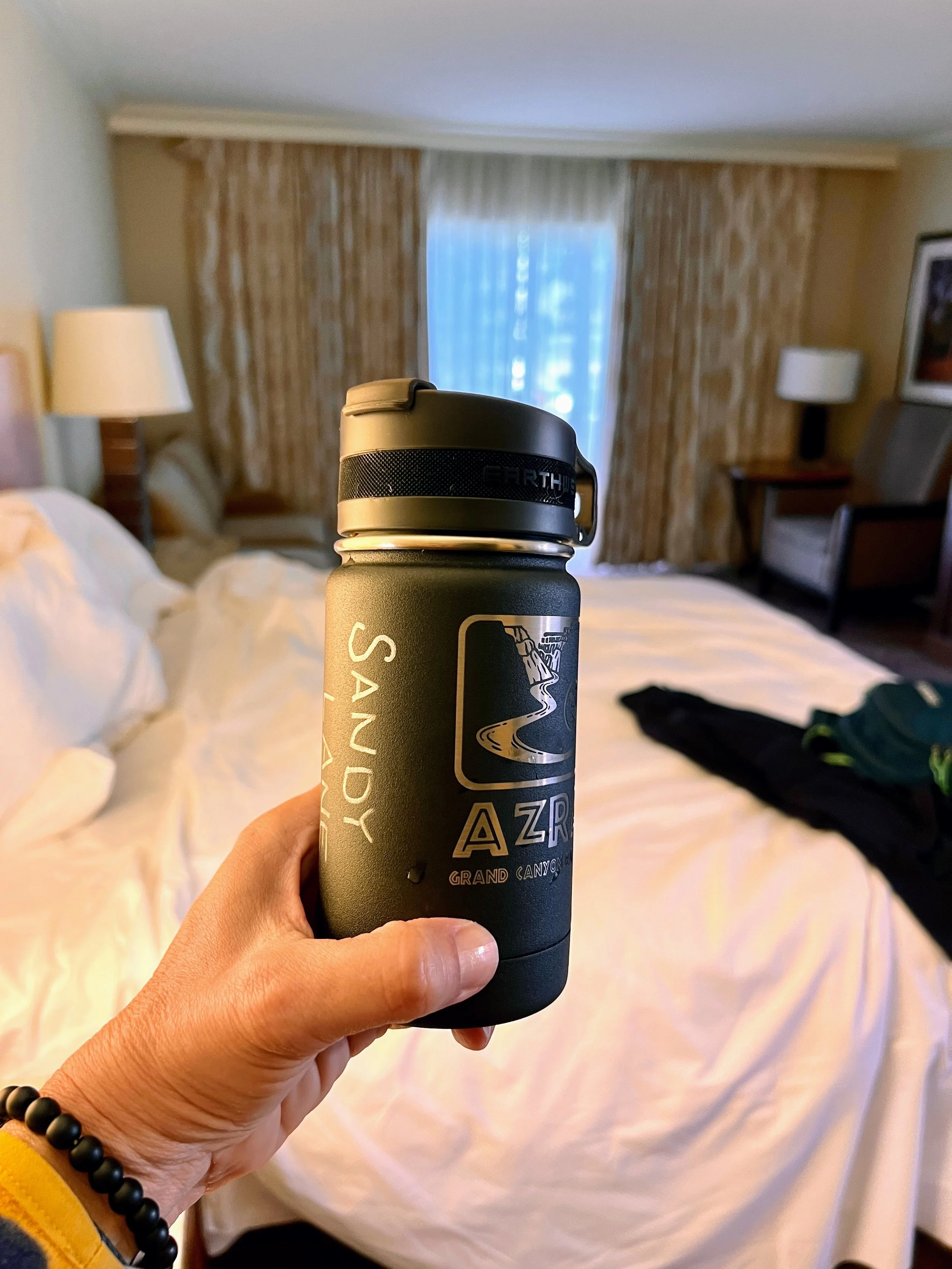
Each of us was given 2 cups to keep as souvenirs of the trip, and both would be used frequently during the trip. An insulated AzRA coffee cup that would be filled each morning with cowboy coffee, a necessary morning intake, was our first gift. The second was a small plastic pee cup for nightly urine collection and to keep us out of the powerful water when we needed relief at night.
With our new, carefully labeled cups, distributed dry bags, and burlap refreshment bag, we were sent back to our rooms to pack and hopefully get a good night’s sleep.
Lugging our allotted 42 cans of beer, spritzers, and sparkling water in a burlap bag was no joke. Although we were told ‘no one was counting’ on our ration max, my bag felt heavy. So I counted. There were 45! I kept my overage…just in case.
The anticipation of what lay ahead led to some light stress as Garrett and I made final choices on what ultimately went with us and what was left behind in our parked car until we got back.
Hot off of reading The Emerald Mile, I was already worrying about some of the rapids that had taken prisoners on that fateful 1983 trip. I chose to leave the book behind in my luggage, but the names of the most dangerous rapids stayed at the top of my mind.