Trials in Swimming
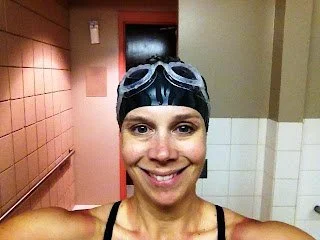
(Self-portrait taken as proof of my very short swimming career in 2012)
June 27, 2012
It is timely that the swim trials are in town. Although not part of my training plan, the feats of these swimmers in Omaha align with my new competitive plunge. I am aware of the competitive gap, but we are all athletes, just with different goals. Their goal is the Olympics. As for me… I want to compete in a triathlon.
As a seasoned runner and newly minted cyclist, I have now caught the triathlon bug. Swimming is the only leg in the race that I lack experience. I took lessons as a child and watched my own children endure years of swimming lessons. How hard could it be?
Step 1: Register for the race. I set my sights on taking on the Omaha Triathlon in August. A local race felt right. I am officially registered.
Step 2: Buy the swim gear. Proper gear (a cute suit) boosts confidence. After a shopping trip to Scheel’s, I was mentally set and ready to take on the water.

Triathlon Swim Training Step 2: Buy the gear (check)
Step 3: Get in the pool.
It took me a week to gather the courage to take on my gym's pool. Arriving at 9:00 pm on a Saturday was my strategy for avoiding the "real swimmers" in the lap pool. Surely they had lives that included more exciting things than swimming at Prairie Life on a Weekend night. With only one other adult in the second lane, I breathed a sigh of relief and climbed into the water.
Figuring out how to put on my gear, on the other hand, was not as easy. It took me five minutes to get the swim cap on and adjust my new goggles (a tip: wet hair = easier cap placement, but dry hair = pulls every hair out from deep at the root). Next, I attempted my first lap. Not only did it feel unnatural and a struggle, but I was also gasping for air after two laps. Seriously? How can I run ten miles or bike fifty with ease, but can't make it across the pool without feeling like I need a breathing machine?
Convinced I was doing something wrong, I got out of the water to review the informational poster on the wall that demonstrated the freestyle swimming stroke. With some newfound knowledge, I decided to give it another try. The guy in the second lane looked on, appearing to try to figure out my story (fear of the water? out of shape? woman at the pool on Saturday night = has issues?).
My second lap swim ended with the same result as my first. I was exhausted and felt like my lungs were full of a mix of water and pure chlorine. I resigned myself to practicing using a paddleboard for ten minutes to maintain my honor. I went home knowing I needed to come up with a Plan B.
Step 4: Ask for help.
A revelation came to me on my drive home: Ask for help. My friend, Dan, was a part of the Prairie Life swimming elites. I saw him at the crack of dawn doing countless laps with ease. If someone could point me in the right direction, it would be Dan. After some text exchanges, Dan pulled through with a great lead, a college swimmer home for the summer. Dan e-mailed her dad to facilitate our connection, but his response wasn't as expected.
"She went back to college to train, but I can sure help Sandy out." V
Very nice, very unexpected, and very much caused me to pause. Scott, this benevolent father, was among the elite of Prairie Life. No doubt this man, who swam like an Olympian and helped train his talented daughters, had no clue what he was signing up for.
I responded with heartfelt thanks and an explanation of my skill level (or lack thereof). Scott still volunteered to take a look at my stroke and help me assess next steps. With a bit of hesitation, Plan B was in the works.
Not only was my first lesson intimidating with Scott as my instructor, but it was also at peak swim time at the gym. I tried to prepare myself by watching countless YouTube videos on the correct swimming stroke and practicing in the pool a couple of nights before our scheduled lesson. Game on.
Under Scott's careful eye, I demonstrated my stroke and tried not to appear as out of breath as I felt. I am very thankful that a video camera was not used to record my swimming technique. By the look on Scott's face and those of the others, my stroke needed some serious modifications. After Scott pointed out that I had put my swim cap on sideways, I began to wonder if this swimming gig was really for me. Then Scott said something that resonated like a breath of fresh air.
"Sandy, everyone has to start somewhere."
He went on to explain that every good swimmer had their first time in the water, their first lesson, their first stroke.
Step 4: Maintain a positive attitude.
I can now report that I can swim for a half a mile without being completely out of breath or showing visible signs of drowning. I am enjoying this new challenge and have been humbled by the skill and athleticism necessary for the sport.
Watching the Swim Trials and the swimmers is nothing short of amazing. They fly through the water with ease, making the difficult and virtually impossible look effortless. I remind myself that they have probably all deployed many Plan Bs in their training plans as well. I will keep plugging away until my August race day. My new motto at the pool..." You can teach an old dog new tricks!"
Epilogue: Even the best attitude can’t save you in open water.
I wrote this story in June of 2012. Shortly after writing it, I went out to the lake for a group practice swim. I almost drowned. After getting kicked in the face at the start, I was swarmed by fellow swimmers, and then I had a panic attack when I realized I was in the middle of the lake with no lifeguards. Somehow, I dogpaddled my way back to shore. Happy to be alive, I have never gotten back in a pool or lake to train again. Instead, that year, I signed up for a duathlon (no swimming required) and won my age group!
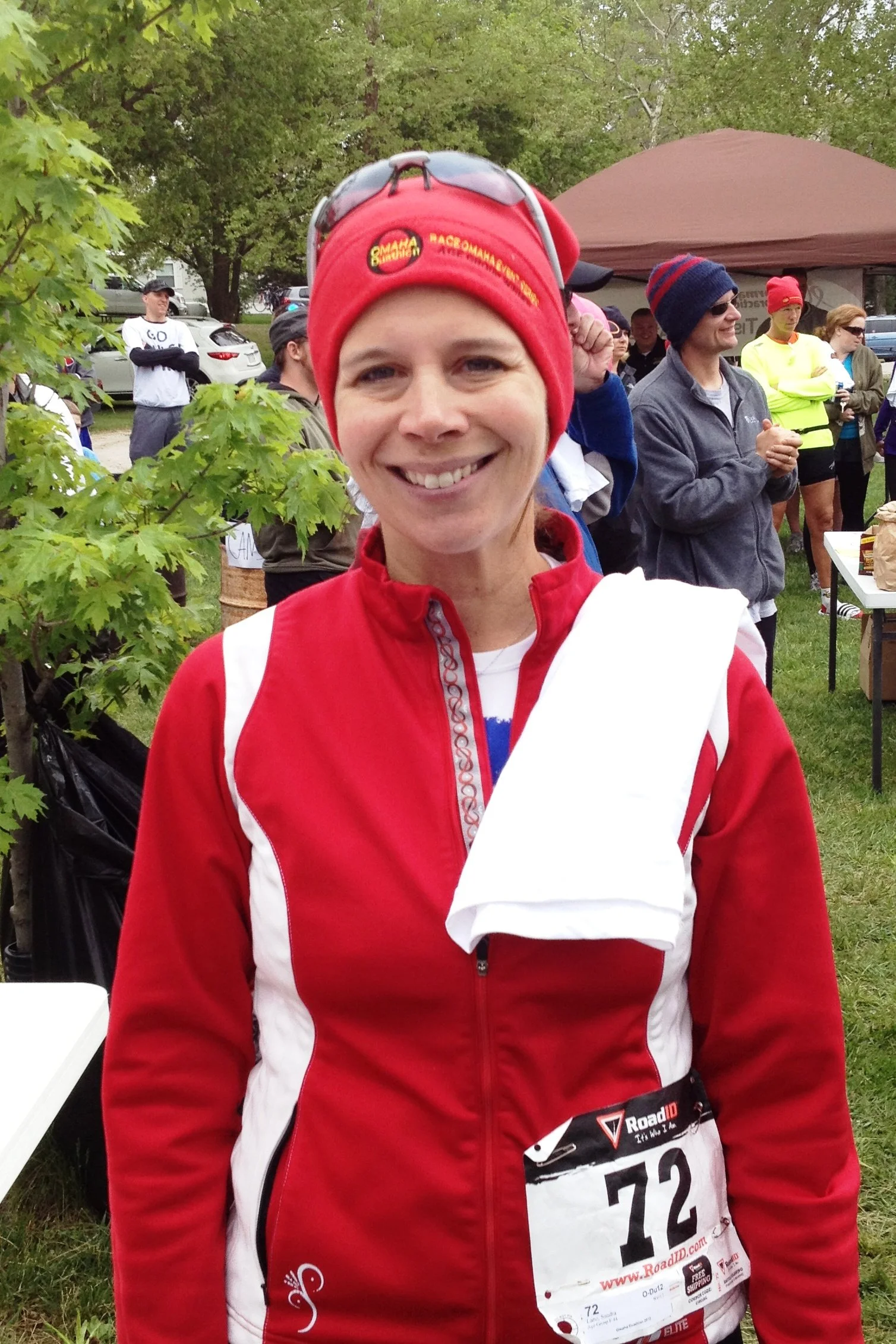
2012 winner! No swimming required.